







Switching out your wardrobe for the new season can be both exciting and a bit overwhelming. When the weather changes, it’s important to store your seasonal clothes properly to save space, protect the garments, and make them easy to access next time. If you’re wondering how to store seasonal clothes efficiently, this guide will walk you through practical, simple steps to keep your closet neat and your clothes in great shape.
Why Proper Storage Matters
Storing seasonal clothes correctly isn’t just about tidiness; it helps protect your garments from damage caused by moisture, pests, and creasing. Proper storage also means less time spent searching for your favorite sweater or swimsuit when the weather changes again. With the right methods, your clothes stay clean, fresh, and ready to wear.
Preparing Clothes for Storage
Before packing away your seasonal clothes, preparation is key.
Clean Everything First
Always wash or dry clean clothes before storing. Dirt, sweat, and oils can attract insects and cause stains that become harder to remove over time. For delicate fabrics, follow care instructions to avoid shrinkage or damage.
Repair and Sort
Check for any needed repairs like missing buttons or small tears. Sorting clothes by type (e.g., sweaters, coats, dresses) or by occasion can save you time later.
Dry Clothes Completely
Never store damp or wet clothes; moisture can lead to mold and mildew. Allow garments to dry fully before packing.
Choosing the Right Storage Containers
The containers you use play a big role in preserving your clothes.
Breathable Storage Options
Fabric garment bags, breathable bins, or cotton storage bags allow airflow, reducing the risk of mildew. Avoid plastic bags that trap moisture unless they are specially designed for long-term clothing storage.
Clear Plastic Bins
Clear bins make it easy to see what’s inside without opening them. Choose airtight bins with tight lids for items that can handle less airflow, but add moisture absorbers.
Vacuum-Sealed Bags
For bulky items like winter coats or comforters, vacuum-sealed bags save space by compressing items. However, avoid long-term use on delicate or natural fibers because compression can damage fabrics.
Organizing Your Storage Space
Efficiency comes from organizing, not just storing.
Label Everything
Use labels or tags to identify the contents of each container. This helps you find items without rummaging or opening every box.
Store Off the Floor
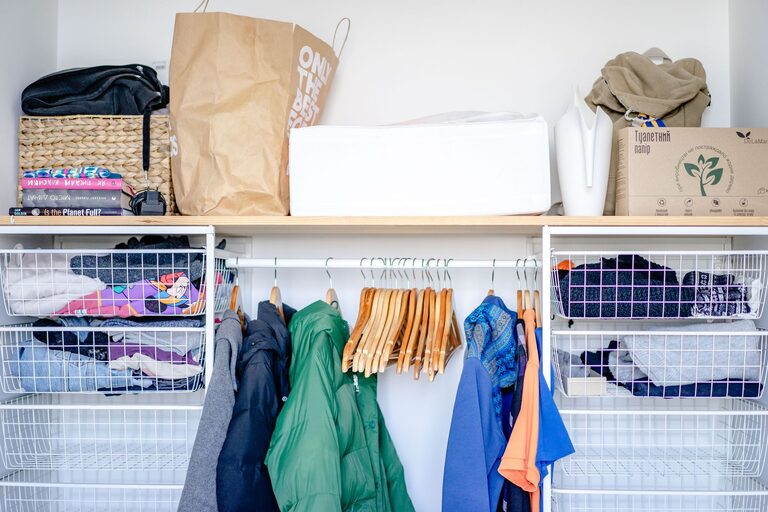
Keep storage containers elevated to prevent contact with damp floors and to improve airflow. Shelves, under-bed storage, or hanging organizers are great options.
Group by Season and Frequency
Store off-season clothes together, but also separate by how often you might need them. For example, keep frequently used accessories in an easy-to-reach place.
Protecting Clothes from Damage
Proper protection ensures your clothes remain in good condition through storage.
Use Cedar or Lavender
Natural repellents like cedar blocks or lavender sachets deter moths and insects while adding a nice scent. Replace them regularly.
Avoid Direct Sunlight
Store containers in cool, dark places to prevent fading and fabric degradation.
Fold or Hang Wisely
Fold knitwear and delicate fabrics to avoid stretching. Hang structured items like coats on padded hangers to maintain shape.
Seasonal Swap Tips
When it’s time to switch your wardrobe:
– Do a quick check to declutter or donate items you no longer wear.
– Rotate clothes by placing freshly stored items at the bottom or back of storage and moving last season’s items to the front.
– Take the opportunity to air out clothes and storage areas before use.
Final Thoughts
Efficiently storing seasonal clothes is about preparation, choosing the right containers, organizing your space, and protecting your garments. With these practical tips, you can keep your wardrobe fresh and ready, reduce clutter, and make every seasonal switch smooth and stress-free. Happy organizing!